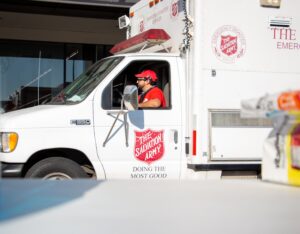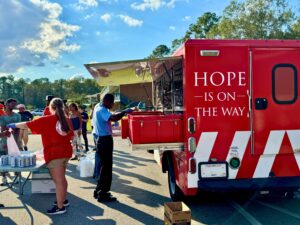
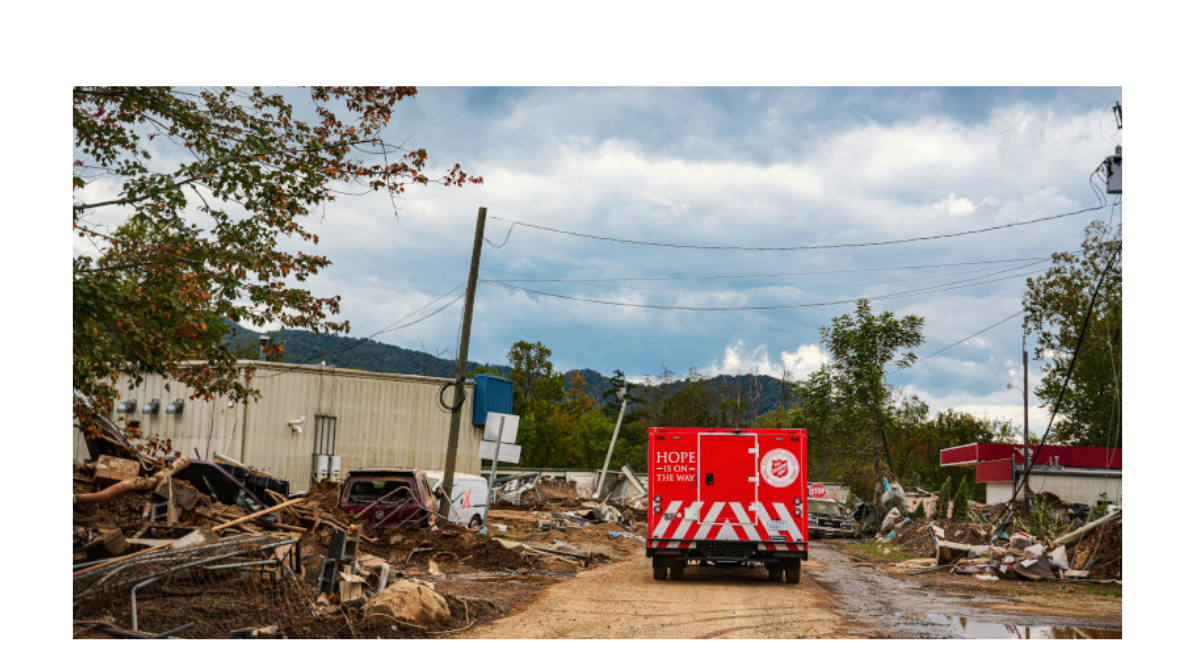
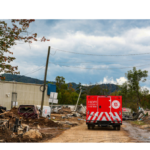
Charlotte, NC (January 7, 2026) – Hurricane Helene is no longer making daily headlines, but for thousands of families across the Carolinas, the crisis continues. Homes remain damaged, lives remain disrupted, and the need for help is still urgent. The Salvation Army remains on the ground helping because recovery takes months and years, not days.
“The storm may be over, but the crisis isn’t,” said Mike Patterson, The Salvation Army emergency disaster services director for the Carolinas. “Long-term recovery helps restore what disasters destroy. Not just structures, but lives.”
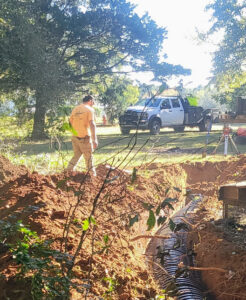
That means going beyond immediate emergency relief. Instead of supplies, it’s solutions: replacing septic systems, repairing roofs, filling the gaps that insurance leaves behind.
To aid in the long-term recovery efforts, The Salvation Army has two long-term recovery coordinators working in affected communities across both Carolinas, partnering with local organizations and case managers to connect families with critical resources. To date, they have helped dozens of households, but the real work is just beginning.
“These aren’t statistics – they’re neighbors whose lives were turned upside down by Helene,” said Valerie Boyd, The Salvation Army’s long-term recovery coordinator for South Carolina. “We are here for the long haul, helping families who still need us today.”
Families like Mr. Farr, a veteran whose Newberry County home was 75% destroyed by the storm. He and his wife faced months of rebuilding but had nowhere to live. Their case manager connected with long-term recovery partners, and working together, The Salvation Army provided a travel trailer, giving the Farrs a place to call home during reconstruction.
Or the Henderson County, North Carolina woman who lost everything in the storm: her rental home, her house-cleaning job, her belongings. She secured temporary housing and found new work, but as her short-term accommodation neared its end, she could not afford a deposit for a new home. Working with local partners, The Salvation Army covered first and last month’s rent plus deposit, ensuring she had a stable home to rebuild her life.
“This is what we do,” explained Alan Gregory, The Salvation Army’s long-term recovery coordinator for North Carolina. “We show up. We stay. We walk alongside people through the hardest seasons of their lives. That’s our calling.”